
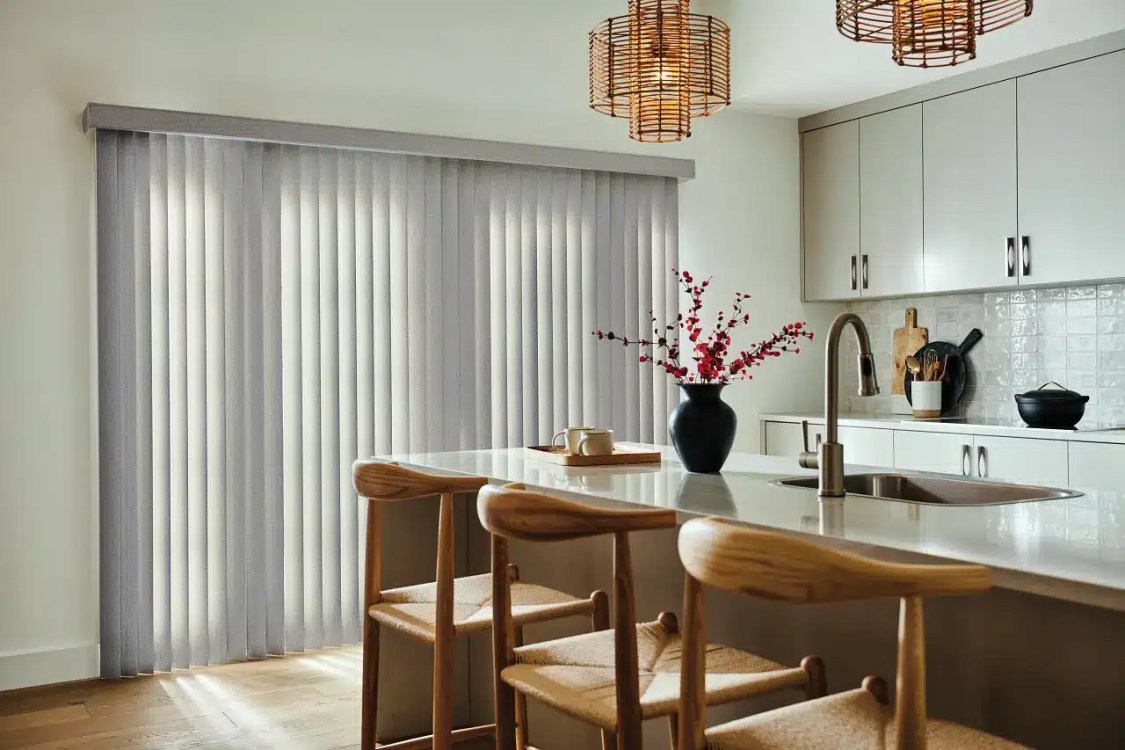
To measure a window for blinds, first decide on an inside mount (the blind sits inside the window frame) or an outside mount (it hangs on the wall over the opening), because that changes everything. Then measure the width in three places — top, middle and bottom — and the height in three places, writing width first, then height. For an inside mount you report the exact opening and let the factory make its tiny deductions; for an outside mount you add a few inches of overlap so no light sneaks around the edges.
How do you measure a window for blinds?
Use a steel tape measure and record every measurement as width × height to the nearest 1/8 inch. For an inside mount, measure the exact width at the top, middle and bottom of the window opening and use the narrowest number, then measure the height at the left, center and right and use the longest — report these exact sizes without subtracting anything, because the manufacturer deducts a small amount so the blind fits. For an outside mount, decide how far the blind should extend past the opening (about 2 to 3 inches on each side and above is typical) and measure that full area instead.

First decide: inside mount or outside mount?
Every measurement you take depends on this one choice, so make it before you pick up the tape. Neither is “better” — they solve different problems.
Inside mount
The blind sits inside the window frame for a clean, built-in look that shows off the trim. It’s the tidier option, but it needs enough flat depth inside the frame for the headrail to sit, and it won’t hide a window that’s out of square. Most faux wood and wood blinds mount inside beautifully when the depth is there.
Outside mount
The blind mounts on the wall or trim above the window and overlaps the opening. Choose it when the frame is too shallow for an inside mount, when the window is noticeably out of square, or when you want maximum light blockage and privacy — the overlap kills the light gaps you get with an inside mount. It’s also the friendlier choice over doors; for those, our window treatments for doors use an outside mount so the blind clears the handle.
Inside mount vs. outside mount — where to measure
What you’ll need (and one rule to memorize)
- A steel tape measure — a cloth or fabric tape stretches and will cost you a re-order.
- A pencil and paper (label every window; “kitchen left,” “primary bath”).
- A step stool for tall windows so you’re measuring straight, not on an angle.
The one rule to memorize: width always comes first, then height — W × H. A 36″ wide by 60″ tall window is written 36 × 60. Swap them and you’ll get a blind that’s 60 wide and 36 tall.
How to measure for an inside mount
- Measure the width of the window opening at the top, the middle, and the bottom. Windows are rarely perfectly square, so write down all three and use the narrowest.
- Measure the height from the top of the opening to the sill at the left, center, and right. Use the longest of the three.
- Check the depth of the frame so you know the headrail will fit flush.
- Record each window as width × height to the nearest 1/8 inch — and do not subtract anything.

How to measure for an outside mount
- Decide how much the blind should overlap the opening. About 2–3 inches on each side and 2–3 inches above is a good default for light control and a balanced look.
- Measure the total width you want the blind to cover, including that overlap.
- Measure the total height from where the headrail will mount (usually 2–3 inches above the opening) down to where you want the blind to end — at the sill, or below the apron.
- Make sure there’s a solid, flat mounting surface for the brackets above the window.
Outside mounts are the fix for problem windows: they hide an out-of-square frame, add privacy, and block the most light. The trade-off is that they cover your trim and project a little further into the room. For big glass and sliders, pair the idea with cellular shades for insulation or a motorized lift on hard-to-reach headrails.

The mistakes that trigger a re-order
- Measuring only once. One width, one height — and a crooked window means gaps. Always measure in three places.
- Height before width. Blinds are always width first. This single swap is the most common re-order there is.
- Measuring your old blinds. Measure the window, never the existing blind — the old one may have been wrong, or a different mount type.
- Rounding to the nearest inch. Work in eighths. “About 35 and a half” is how you end up with a light gap.
- Forgetting the depth check on an inside mount, then discovering the headrail sticks out past the frame.
Or skip the tape — when we measure, the fit is on us
Here’s the honest version: custom blinds are made to your numbers, and a measurement mistake is on the person who took it. That’s exactly why Nation’s Blinds includes free professional measuring with every project across Northern Virginia, Washington DC and Maryland. Our installer measures every opening, confirms the right mount, and if it’s our measurement, the fit is guaranteed — no re-order math on you.
If you’re local, our guide to window blinds in Fairfax covers which styles suit which rooms, and you can try any look on your own window first with the free AI visualizer.
Let us handle the measuring
Book a free in-home consultation and we’ll measure every window precisely, recommend the right mount, and guarantee the fit — serving Northern Virginia, DC & Maryland.
Frequently asked questions
Do you measure width or height first for blinds?
Always measure and record the width first, then the height — blinds are ordered as width by height (W x H). Writing height first is the most common reason a custom blind arrives the wrong size.
Should I deduct anything from my inside-mount measurement?
No. For an inside mount you report the exact width and height of the window opening, and the manufacturer makes a small deduction (often around half an inch) so the blind clears the frame. If you subtract that amount yourself, the blind will be too narrow and leave gaps on both sides.
How much should an outside-mount blind overlap the window?
A common guideline is about 2 to 3 inches of overlap on each side and 2 to 3 inches above the opening, which controls light and gives a balanced look. Mount the headrail on a flat, solid surface and extend the blind down to the sill or below the apron.
How do I know if my window is deep enough for an inside mount?
Measure the flat depth of the window frame from the glass to the front edge. Roughly 2 to 3 inches of depth lets most blinds mount inside flush; with less depth, an outside mount or a low-profile headrail is usually the better choice.
Can Nation’s Blinds measure my windows for me?
Yes. Nation’s Blinds includes free professional measuring with every project across Northern Virginia, Washington DC and Maryland, and when the company takes the measurement, the fit is guaranteed. Call (571) 407-7981 or request a free in-home consultation to schedule.


