
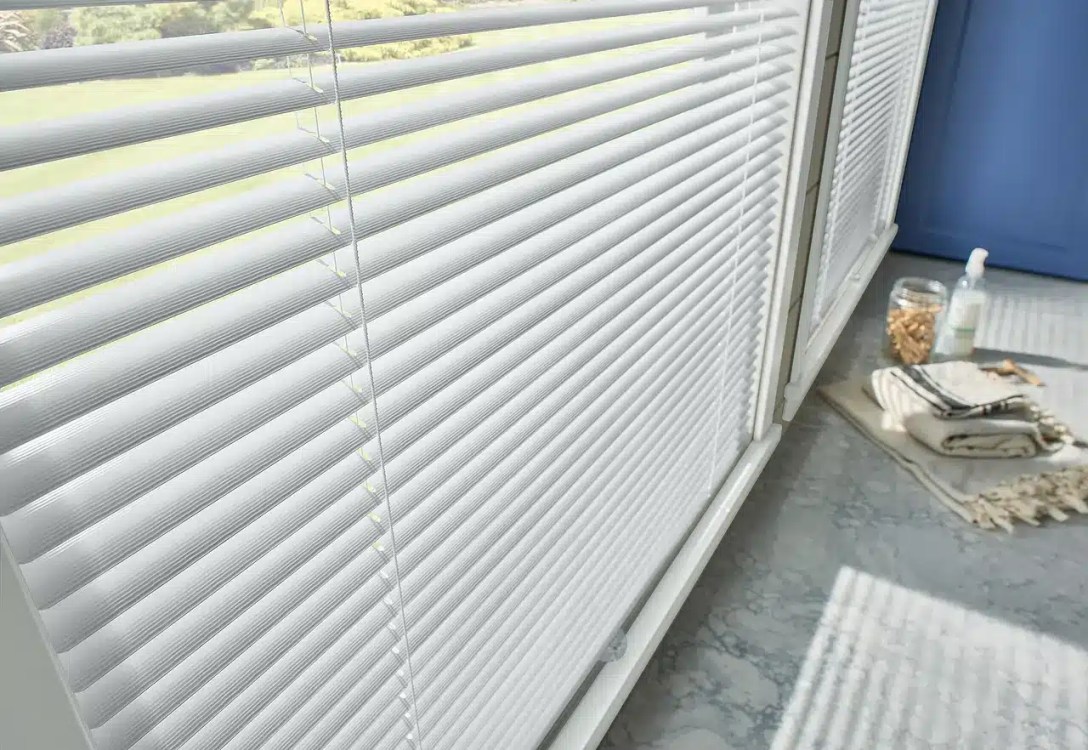
The honest answer is that the cost of blinds comes down to five things: the material, the size and number of windows, the mount and lift system, any light-control upgrades, and the brand. A single small aluminum blind sits at the affordable end; a whole house of motorized wood blinds or plantation shutters is a real investment. Because every blind is custom-made to one specific window, the only truly accurate number is the one from a measure — so here’s exactly what pushes the price up or down, and where it’s smart to spend.
How much do blinds cost?
The price of custom blinds depends mostly on the material, the size and number of windows, the lift system, and the brand. As a general ladder, aluminum and vinyl blinds are the most budget-friendly, faux wood offers the best all-round value, real wood and specialty fabric shades step up from there, and plantation shutters are the premium, longest-life option. Adding cordless or motorized lifts, blackout liners, or designer brands raises the price; ordering a whole house at once usually improves the value. Because Nation’s Blinds makes every treatment to order, it provides an exact quote at a free in-home consultation, with 0% APR financing available.

Where each material sits on the price ladder
Relative only — real prices overlap and depend on size, options and brand.
1. The material sets the starting point
Material is the single biggest factor, and it maps closely to the ladder above. Aluminum blinds and vinyl are the most budget-friendly — simple, durable, and perfect for offices, laundry rooms and rentals. Faux wood and composite blinds are the value sweet spot most homes land on: they look like wood but cost less and survive humidity, which is why they win in kitchens and baths.
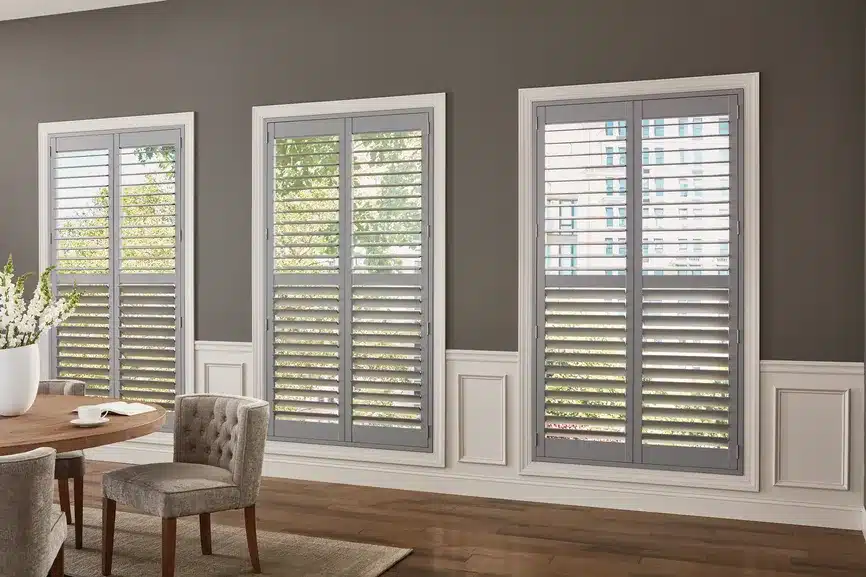
From there you’re paying for richer materials. Real wood blinds carry a premium for the warmth and light weight of genuine basswood. Engineered fabric shades like cellular shades cost more because the honeycomb structure does real work — insulation and light control. And plantation shutters sit at the top: they’re built like furniture, mounted permanently, and priced accordingly.
2. Size — and how many windows
Blinds are priced by the square, so a big picture window or a two-story great-room opening costs more than a standard bedroom window in the same material. Specialty shapes — arches, angles, skylights — add to it because they’re built to a template rather than a standard size.
The number of windows cuts the other way, in your favor. Doing a whole house or a full floor at once is almost always better value per window than replacing one blind at a time, and it’s where a single consultation and install trip earns its keep.

3. The lift system: cordless, motorized & smart
How the blind raises and tilts is a real line item. Standard corded lifts are the baseline. Cordless lifts cost a bit more and are worth it in homes with kids or pets — there’s no cord to manage. Motorized and smart shades, including Hunter Douglas PowerView®, are the biggest lift upgrade: you’re paying for the motor, the control, and often a hub.
4. Light control & add-ons
Upgrades that change how the blind performs also change the price. Blackout and room-darkening liners add cost but are non-negotiable in nurseries and primary bedrooms. Top-down/bottom-up operation, dual (day-night) fabrics, cordless wands, and premium valances or decorative tapes all nudge the number up. None are required — they’re where you tailor the blind to the room.
5. The brand & customization
Nation’s Blinds is an authorized dealer for Hunter Douglas, Graber and Norman, and they span the range. Graber tends to deliver designer looks at strong whole-home value; Hunter Douglas carries the premium, patented lines and the deepest automation ecosystem; Norman is known for furniture-grade shutters. Custom colors, specialty finishes and exact-match stains are where personalization adds to the total.
Where to save without regretting it
- Match material to the room, not the whole house. Faux wood in wet or high-traffic rooms, real wood only where it’s seen — you don’t pay wood prices for a laundry room.
- Splurge on the front-of-house rooms guests actually see; keep it practical in secondary bedrooms and utility spaces.
- Motorize selectively — only the tall or hard-to-reach windows.
- Do more windows in one order to get better value than piecemeal replacements.
- Skip add-ons you won’t use. Blackout belongs in bedrooms, not every window.
Why we don’t publish a price list
Here’s the straight version: a custom blind is made for one window in the world — yours — so a generic price chart would be a guess, and guesses are how people end up disappointed. That’s also why custom orders are final; each piece is cut to your exact measurements and can’t be resold. What you get instead is better than a chart: a free in-home consultation where Nation’s Blinds measures every window, shows real samples, and hands you an exact, itemized quote — with 0% APR financing to spread it out. See the full terms on the return & exchange policy page.
Local to the DMV? Our guide to window blinds in Fairfax walks through options by room, and you can preview any style on your own window with the free AI visualizer before you spend a dollar.
Get your exact price — free
Book a free in-home consultation and Nation’s Blinds will measure, show samples, and give you an itemized quote across Northern Virginia, DC & Maryland. 0% APR financing available.
Frequently asked questions
What is the cheapest type of blind?
Aluminum and vinyl blinds are generally the most budget-friendly, followed closely by faux wood, which offers the best balance of price, looks and durability. The final cost still depends on the size of the window, the lift system and the brand.
Why are custom blinds more expensive than store-bought?
Custom blinds are cut to the exact size of each window, made in the material, color and lift system you choose, and installed to fit precisely, which stock blinds cannot match. That made-to-order fit is why they last longer and look built-in, and why the price reflects the specific window rather than a one-size product.
Does motorizing blinds add a lot to the cost?
Motorized and smart shades are one of the larger upgrades because you are paying for the motor, the control and sometimes a hub. A cost-effective approach is to motorize only tall or hard-to-reach windows and keep manual or cordless lifts on easily reached windows.
Is it cheaper to do the whole house at once?
Usually yes. Ordering multiple windows together is typically better value per window than replacing blinds one at a time, since a single measure and installation covers the whole project. Nation’s Blinds provides an itemized quote so you can see the difference.
How do I get an exact price for my windows?
Book a free in-home consultation with Nation’s Blinds, which serves Northern Virginia, Washington DC and Maryland. The team measures each window, shows real samples, and provides an exact itemized quote, with 0% APR financing available. Call (571) 407-7981 to schedule.


